
The UK’s manufacturing sector is a key part of the country’s economy. It offers many career paths. With a rich history and diverse industries, it’s a stable and rewarding choice for many.
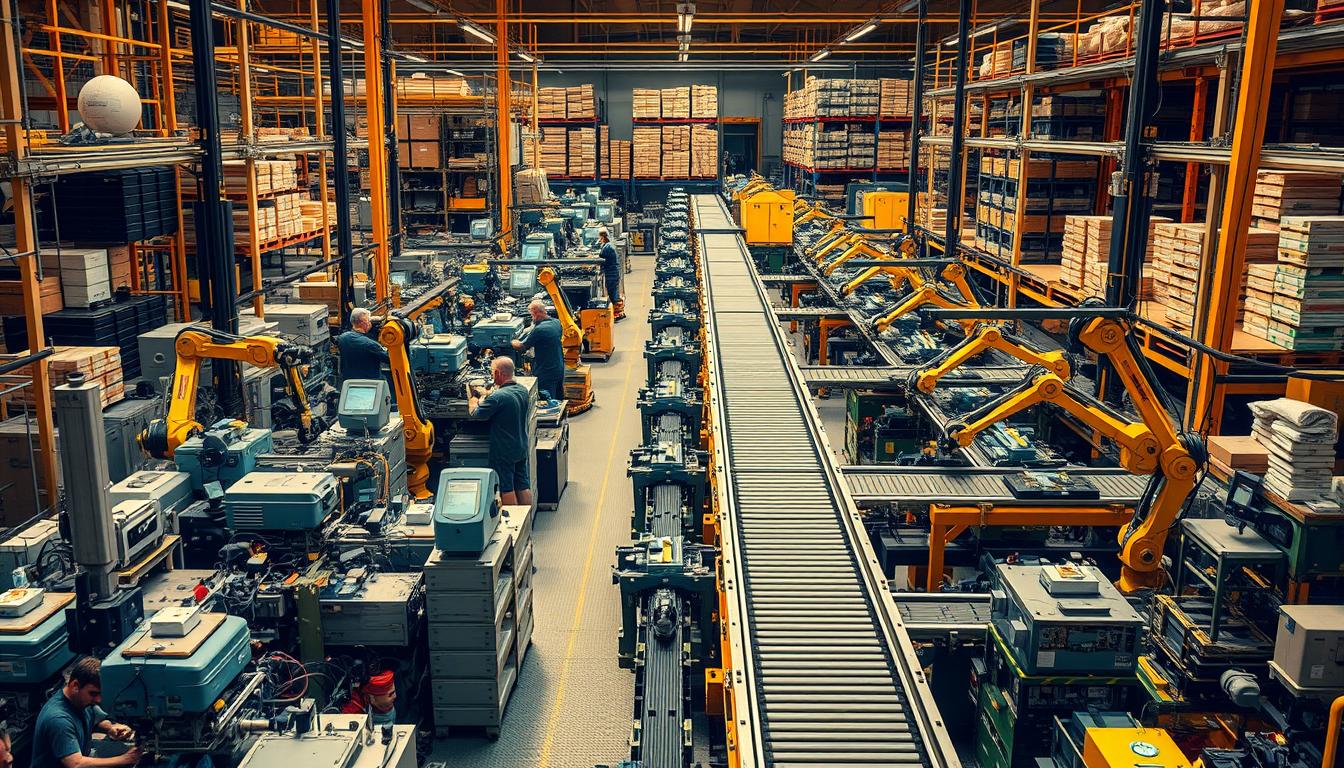
Competencies required for assembly line and factory roles
Roles in engineering and production line management are vital for the UK’s economy. The industry is always changing, bringing new challenges and chances for growth.
See the best job openings
*You will continue on our website.
Looking into manufacturing and production jobs can lead to a fulfilling career. There are chances for advancement and personal development.

Employment opportunities
Tesco jobs: build your retail career with a trusted UK brand
The Current Landscape of UK’s Manufacturing Sector
The UK’s manufacturing sector is key to the country’s economy. It offers many industrial jobs. This sector includes different industries that drive innovation and production.

Employment opportunities
HSBC jobs: develop your career in banking and financial services
Automotive and Aerospace Excellence
The UK is famous for its car and plane makers. Companies like Jaguar Land Rover and Rolls-Royce are leaders. They offer jobs in engineering and assembly line work.

Employment opportunities
Unilever careers: grow with a global leader in sustainability and innovation
The food and drink sector also plays a big role. Nestle and Coca-Cola have operations here. They provide jobs in production and packaging.
The Midlands Engine
The Midlands are called the “Midlands Engine” for their strong manufacturing. This area has many industries, including cars and planes. It offers lots of jobs.
Northern Powerhouse Initiatives
The Northern Powerhouse aims to grow the North’s economy. It invests in manufacturing. This creates new jobs and chances for local people.
The UK’s manufacturing sector is changing and growing. Different areas are helping it stay strong. As it changes, it will keep being a big source of jobs and growth.
Types of Manufacturing and Production Jobs in the UK
The UK’s manufacturing sector is full of job opportunities. It has roles for people with all sorts of skills and experience. From entry-level to senior positions, there’s something for everyone.
Production operatives and machine operators are key to manufacturing. They run machines, put products together, and meet production goals. These jobs need attention to detail, hand skills, and the ability to work quickly.
Quality Control Specialists
Quality control specialists are essential for keeping products up to standard. They check and test products to make sure they meet quality standards. Their work helps find and fix problems, making products better.
CNC Programmers and Operators
CNC programmers and operators work with computer-controlled machines. They program and run these machines to make parts and components accurately. This job requires technical skills, problem-solving, and precision.
Maintenance Engineers and Technicians
Maintenance engineers and technicians keep equipment running smoothly. They do regular checks, fix problems, and make repairs. Their work is crucial for keeping production going without interruptions.
Production Managers and Team Leaders
Production managers and team leaders lead production teams. They plan, coordinate, and manage production to meet goals. They also solve any problems that come up during production.
Supply Chain and Logistics Coordinators
Supply chain and logistics coordinators manage the flow of goods and information. They work with suppliers and distributors to get products delivered on time. Their work makes the supply chain more efficient and cost-effective.
The manufacturing sector in the UK has many roles for different skills and interests. Whether you’re starting your career or looking to change fields, there are plenty of opportunities in manufacturing.
Qualifications and Skills Required for Success
To succeed in the UK’s manufacturing and production sector, you need both academic qualifications and practical skills. It’s important to have technical knowledge, industry-specific training, and soft skills.
Relevant Degrees and Vocational Qualifications
Many jobs in manufacturing ask for degrees in subjects like mechanical engineering or materials science. Vocational qualifications, such as BTECs and NVQs, are also valued. They offer practical skills that are useful in the workplace.
Industry-Specific Training Programmes
Staying updated with new technologies and processes is key. Industry-specific training programmes help with this. They are often run by employers or industry bodies and can lead to recognized certifications.
The UK government supports the manufacturing sector with various schemes. These include apprenticeships and the National Skills Academy for Manufacturing. They offer great chances to get qualifications and gain experience.
Company-Sponsored Development
Many manufacturing companies invest in their employees’ growth. They offer training and development programmes. These can include on-the-job training, external courses, and qualifications.
Digital Literacy and Automation Knowledge
With more automation in manufacturing, understanding digital systems is crucial. Skills in robotics, data analysis, and CAD are essential.
Problem-Solving and Teamwork
Skills like problem-solving and teamwork are also vital. Employees need to work well in teams and solve problems effectively.
By getting the right qualifications and skills, you can thrive in the UK’s manufacturing and production industry.
Benefits of Pursuing a Career in Manufacturing
A career in manufacturing is full of benefits. It’s a stable and growing field. There are many roles to choose from, matching different skills and interests.
Salary Benchmarks Across Different Roles
Manufacturing jobs pay well. Salaries vary, with some roles offering bonuses or overtime. For example, production managers and engineers often earn more than the national average.
Manufacturing jobs also come with extra perks. These include health insurance, pension plans, and paid leave. Some companies even offer on-site facilities and training programs.
Resilience During Economic Downturns
The manufacturing sector is strong even when the economy is weak. This means jobs in this field are often more secure than others.
Essential Nature of Production Work
Manufacturing is key to the economy. It produces goods for both people and businesses. This makes manufacturing jobs less likely to be outsourced or automated.
Vertical Progression Opportunities
There are many chances to move up in manufacturing. You can become a supervisor or manager. Or, you can specialize in areas like quality control or supply chain management.
Cross-Functional Development
Working in manufacturing helps you develop many skills. You’ll learn technical knowledge, problem-solving, and leadership. This makes you a versatile professional.
In summary, a career in manufacturing offers many benefits. From good pay to chances for growth, it’s a strong choice in the UK.
Navigating Challenges in the UK Manufacturing Sector
The UK’s manufacturing sector is at a turning point. It faces challenges in technology, economy, and demographics. To overcome these, new and innovative solutions are needed.
Industry 4.0 and Digital Manufacturing
Industry 4.0 and digital manufacturing are changing the game. They bring automation, data exchange, and IoT to make production more efficient. For those in fabrication careers, learning new tech is essential.
As tech advances, workers need to upskill and reskill. Training programs focus on new tech, preparing workers for modern equipment and software.
Collaborative Industry-Education Initiatives
Working together, industry and schools are key to a skilled workforce. They create training that fills specific skill gaps. This ensures workers meet the sector’s needs now and in the future.
Retraining Programmes for Career Changers
For those wanting to switch careers, retraining offers a way into assembly line vacancies and more. These programs teach the skills needed to thrive in manufacturing.
Shift Patterns and Flexibility
Manufacturing often requires shift work, affecting work-life balance. Employers are exploring flexible work options to keep talent.
Workplace Wellbeing Initiatives
Improving mental and physical health at work is now a priority. Initiatives boost productivity and create a better work environment.
In summary, the UK’s manufacturing sector has many hurdles. But with tech innovation, upskilling, and a focus on wellbeing, it’s ready to face these challenges. It remains a crucial part of the UK’s economy.
Shaping the Future: Why Manufacturing Remains a Smart Career Choice
The UK’s manufacturing sector is changing fast, thanks to new tech and ideas. This means manufacturing positions are getting more complex. They offer many chances for people to grow their skills and knowledge.
Even with its challenges, manufacturing is crucial for the UK’s economy. It provides a variety of manufacturing sector roles for different talents and interests. Whether you’re on the production line, an engineer, or a manager, there are many paths to a fulfilling career in production industry jobs.
As the sector keeps up with new needs, it’s clear manufacturing will keep driving the UK’s economy forward. With its focus on innovation, it’s a great place for people to build lasting and successful careers.