
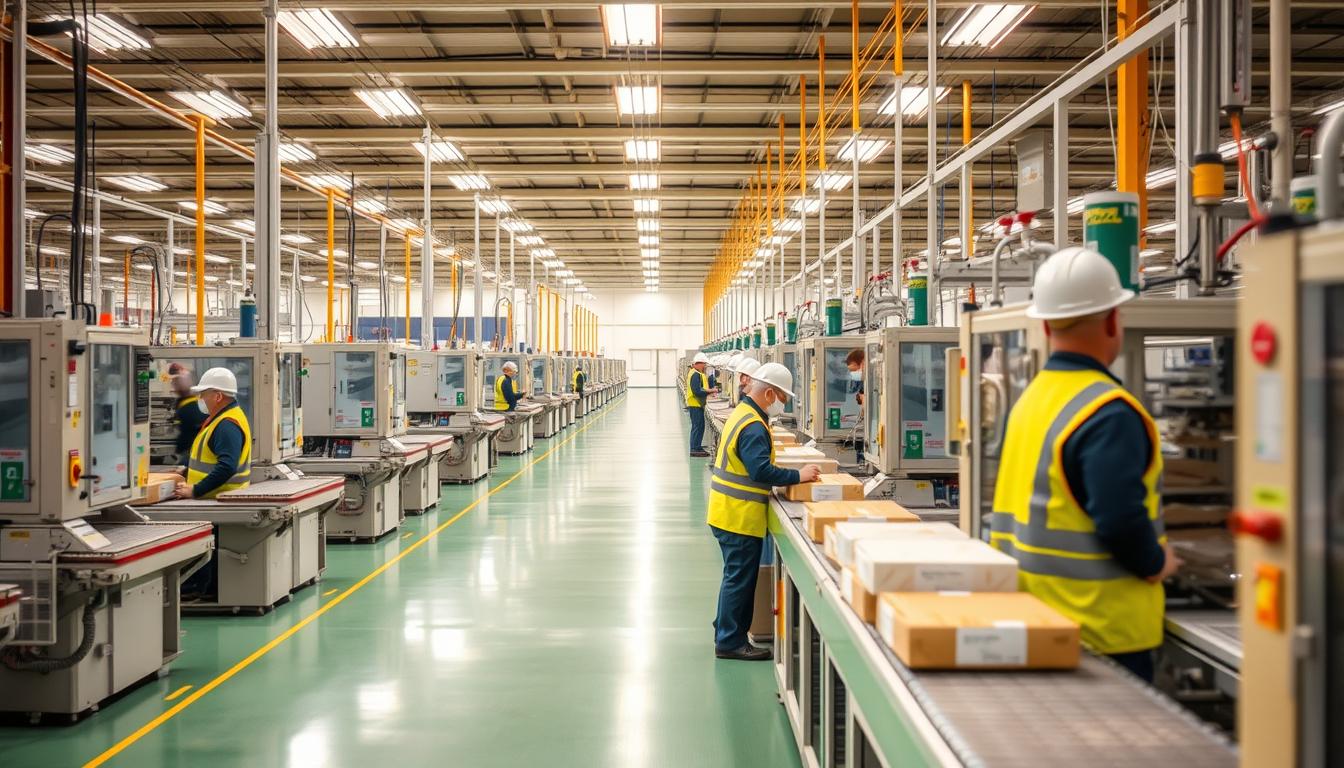
The UK’s manufacturing sector needs skilled workers for assembly line and factory jobs. These roles are key to keeping production running smoothly.
How to apply for production roles at Greencore Group UK
To do well in these jobs, people need certain skills. These include technical abilities, attention to detail, and teamwork skills.
See the best job openings
*You will continue on our website.
The manufacturing sector is changing fast. This means more jobs for those who can learn new technologies and processes. So, working in manufacturing is becoming a popular choice for many.

Employment opportunities
Amazon careers: build your professional path with innovation
Essential Technical Skills for UK Factory Workers
To do well in factory jobs, you need certain technical skills. These skills help machines and equipment work right. This makes sure production goes smoothly and safely.

Employment opportunities
Tesco careers: grow your future in retail and customer service
Being able to use complex machines is key. This includes CNC machines and robotic lines. Workers must know how to use these, keep them running, and fix problems. This keeps the equipment working and production going.
Skills in welding, making things, and electrical work are also important. Knowing how to check quality and read plans is crucial. As factories use more automation, knowing about programming and robotics is getting more important too.
Having these skills helps factory workers do their jobs better. This makes them more valuable and opens up more career chances in the industry.
Core Competencies for Assembly Line and Factory Roles
In the fast-paced UK manufacturing world, some skills are key for success. People in assembly line and factory jobs need to work well and keep quality high.
Skills like attention to detail, teamwork, and being adaptable are very important. Attention to detail makes sure products meet standards. Teamwork keeps production lines running smoothly.
Being adaptable is also crucial. It helps workers deal with changes or unexpected problems. This flexibility keeps production going and reduces downtime.
These skills are not just good to have; they’re essential for doing well in these jobs. Having them helps people do great in their careers and helps the factory succeed.
Critical Soft Skills in Manufacturing Environments
Manufacturing needs both technical and soft skills to work well. On the factory floor, good communication is key. It makes sure production runs smoothly.
Skills like problem-solving and time management are also crucial. They help workers deal with changes and manage their tasks well.
Working together is vital in manufacturing. When team members communicate well and work together, it boosts productivity. It also cuts down on mistakes.
Employers in manufacturing look for people with strong soft skills. These skills help workers do better and make production more efficient.
By mixing technical skills with soft skills, people in factory roles can do great. They help the manufacturing industry succeed.
Health and Safety Competencies in British Factories
Health and safety skills are key for workers in assembly lines and factories. Keeping the workplace safe is vital to avoid accidents and keep production high.
Risk assessment is a major skill. Workers need to spot dangers and reduce them. They must know how to do risk assessments and use controls to lower risks.
Using personal protective equipment (PPE) is also crucial. Employees must learn how to wear PPE like gloves and safety glasses. This helps prevent injuries and illnesses.
Knowing emergency procedures is also important. Workers should know how to evacuate, give first aid, and who to call in an emergency. This helps them act fast in emergencies.
By focusing on health and safety, British factories can make workplaces safer. This leads to fewer accidents and a better work environment for everyone.
Physical Requirements and Ergonomic Awareness
Ergonomic awareness is key for factory workers to avoid injuries and stay productive. Industrial jobs often require physical effort, so being fit and having stamina is important.
Workers need to be mindful of their posture and movement to prevent musculoskeletal disorders. Training on ergonomic practices can greatly lower injury risks. Employers must also ensure the workplace is safe to avoid physical strain.
Keeping physically healthy is essential for factory workers. This means regular exercise, eating well, and getting enough sleep. By focusing on physical health and ergonomic practices, workers can lower injury risks and feel better overall.
Technological Literacy in Modern UK Manufacturing
Knowing how to use technology is key for workers in UK manufacturing today. As jobs on the production line and in assembly plants change, using new tech is more important than ever.
The UK’s manufacturing is changing fast with Industry 4.0. This new era brings in smart systems, the Internet of Things, and artificial intelligence to make things.
Industry 4.0 Technologies
Industry 4.0 is changing how we make things. It includes:
- Smart factories that use data and automation
- Advanced robots and learning machines
- Cyber-physical systems that mix physical and digital processes
People working on production lines need to know how to use these new tools. They must have a good grasp of technology.
Barcode and RFID systems are key for tracking goods and materials in UK plants. They help keep an eye on things in real-time, making work smoother and cutting down on mistakes.
It’s vital for those in assembly plant jobs to know how to work with these systems. They need to understand how to scan barcodes, use RFID readers, and make sense of the data they produce.
Boosting tech skills can help UK makers work better, save money, and stay ahead in the world market.
Quality Assurance and Continuous Improvement
Quality assurance and continuous improvement are key to success in UK factories. They ensure products meet high standards. This is crucial for quality in factory work.
Quality Documentation
Keeping accurate records is vital for quality assurance. It includes production processes, quality checks, and following rules. This helps in tracking and ensuring quality in factory roles.
Root cause analysis helps find the real reasons behind problems. By fixing these, factories can avoid future issues. This leads to better quality and less waste.
Continuous improvement is about making things better all the time. In factories, this means training, using new tech, and following lean principles. It boosts efficiency and quality.
Building a Successful Career in UK Manufacturing
To succeed in UK manufacturing, you need to keep learning and be ready to change. There are many jobs available, and those who are eager to grow can do well. This industry is always moving forward, offering new chances for everyone.
There are many ways to move up in manufacturing. You could become a supervisor or work in quality control or engineering. Learning the basics well helps you get ahead and find new jobs.
It’s important to know the latest in technology and methods. As the industry changes, being flexible and creative is key. This way, you can take advantage of new chances and help UK manufacturing grow.